For Ayurveda OPDs
Ayurveda clinic software built around the OP case sheet
Record complaints, lifestyle, diet, Ashtavidha Pariksha and the stage of disease on a short OP sheet, prescribe classical formulations with Anupana and Kala, and plan Panchakarma, with an AI scribe that drafts from the consult for you to check.
Our team switches Ayurveda on for your clinic.
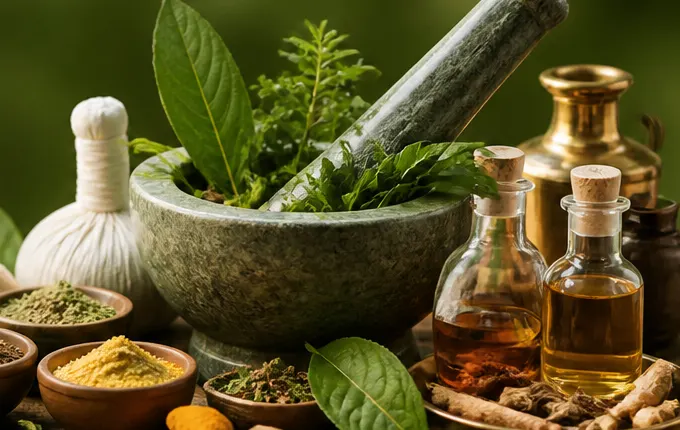
Ashtavidha Pariksha
- Nadi
- Mutra
- Mala
- Jihva
- Shabda
- Sparsha
- Drik
- Akriti
The OP case sheet, in the order you already write it
Many Ayurveda OPDs work from a printed OP case sheet. The short OP sheet follows the same order, so the visit reads the way your paper one does.
- 1
Complaints and history
Presenting complaints, aggravating and relieving factors, pain site and a 0 to 10 pain score, K/C/O, history of the presenting complaint and past illness, investigations, previous diagnosis, treatment history, current medication, and family, personal and social history.
- 2
Lifestyle
Appetite, digestion, bowel and micturition by day and night, sleep, mental status, emotions, periods, tea, coffee, tobacco and alcohol with quantity, junk and reheated food, drinking water, head oil, external applications, and bath.
- 3
Diet and nutrition
Breakfast, lunch and dinner, food allergies and dislikes, height and weight with BMI worked out, and nutritional status.
- 4
Examination and diagnosis
Physical examination, respiratory rate, red flags and referral, then D/D, P/D, final diagnosis and stage of disease (Ama, Pachyamana, Nirama, Kshaya, Avarana, Leena, Vishama, Dhatupaka). P/D has to be written before the visit can be signed on this sheet.
- 5
Review visits
At each review, tick relieved, improved, better than before, no relief or worsened, as on the paper sheet.
Ayurvedic assessment when you want it
The short sheet keeps the Ayurvedic block optional. Switch to the full case sheet when a case needs it.
Prakriti on the patient
Prakriti is saved on the patient, not on each visit, so it carries forward.
Vikriti, Agni, Koshtha and Ama
Record Vata, Pitta and Kapha as Vriddhi, Sama or Kshaya for today, with Agni, Koshtha and Ama.
Ashtavidha and Dashavidha Pariksha
Tap a finding for Nadi, Mutra, Mala, Jihva, Shabda, Sparsha, Drik and Akriti, or type your own. Grade Sara, Samhanana, Pramana, Satmya, Sattva, Ahara Shakti and Vyayama Shakti.
Your findings only
Every option is your own finding. Medabha does not work out a Prakriti or a dosha state for you.
Ayurveda diagnosis with NAMASTE codes
Write the diagnosis by its Sanskrit name. Medabha adds a code only when the name matches exactly.
From the Ministry of Ayush list
Codes come from NAMASTE (National AYUSH Morbidity and Standardized Terminologies Electronic), published by the Ministry of Ayush at namaste.ayush.gov.in, with the WHO ICD-11 TM2 code where the Ministry gives one.
Exact matches only
If the name does not match a NAMASTE term exactly, it stays as words in the assessment for you to code.
Up to six per visit
A visit can carry up to six NAMASTE codes.
Classical formulations and Panchakarma plans
Ayurveda medicines are kept on their own list, apart from the allopathic formulary.
Anupana and Kala on every line
Note what each medicine is taken with, such as warm water, honey or ghee, and when, such as before food or at bedtime. Dose and dilution go in as you write them.
A separate list of formulations
Kashayam, arishtam, asavam, choornam, gulika, ghritham, thailam, lehyam and bhasmam preparations from a classical formulations list, or typed as you name them.
Pathya and Apathya
Diet and lifestyle to follow and to avoid, printed for the patient.
Panchakarma plans
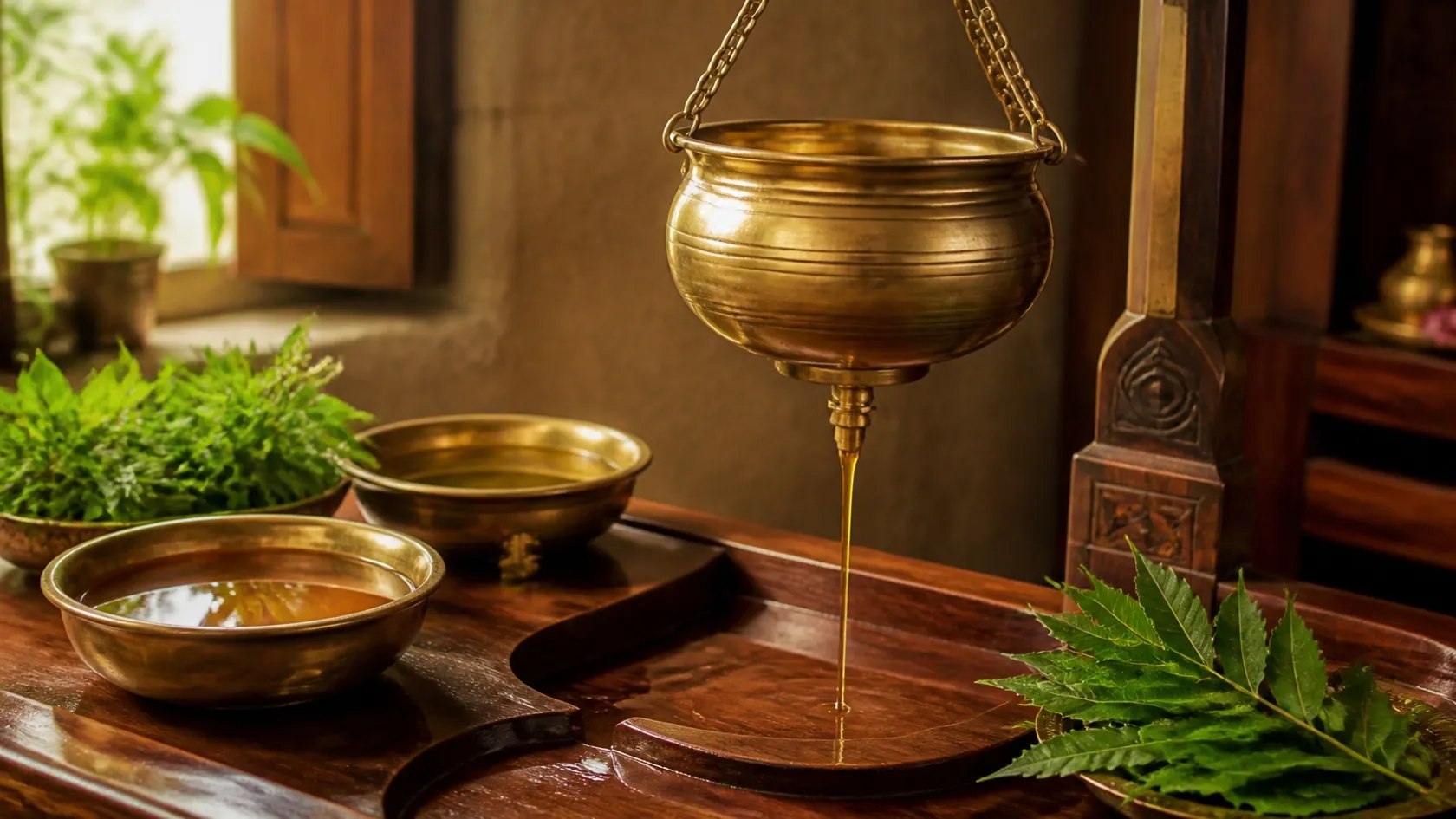
Plan Purvakarma, Pradhana karma, Paschat karma and other therapies such as Shirodhara, Kati Basti or Pizhichil by day, and mark each as planned, ongoing, completed or cancelled. Which procedure, how many days and which oil or decoction stays your call.
OP No on every page
The printed prescription from the short OP sheet carries the OP number on every page.
Less typing: the AI scribe and a WhatsApp questionnaire
Two ways to fill the sheet before you write anything yourself. Both only draft; you check every field.
Questionnaire before the visit
Send the patient a ready questionnaire on WhatsApp. Paste their reply into the visit, and it fills only the patient's own sections: registration, special needs, history, lifestyle and diet. The default message invites short answers in English or Malayalam. Read every filled field before you rely on it.
AI scribe on an Ayurveda visit
The scribe drafts an Ayurveda note from the consult: Nidana, Ashtavidha findings, the diagnosis by its Sanskrit name, Panchakarma advised, and Pathya and Apathya. It does not add allopathic medicines, and it lists only medicines you name, as spoken.
Ayurveda words it listens for
On Ayurveda visits the speech model is told to expect preparation and therapy words as doctors say them, such as kashayam, arishtam, thailam, kizhi and dhara, along with your clinic's most prescribed medicines.
Your typing wins
What you type is never overwritten. Where the recording and the patient's answer disagree, the recording's version is used and the field is listed for you to check.
You apply and sign
Nothing reaches the chart until you review the draft and apply it. The scribe is told to record only what was said, so it should not guess a Vikriti, Prakriti or examination finding. Check them anyway.
How to switch Ayurveda on
Our team switches Ayurveda mode on for each clinic that asks.
Not yet at sign-up
You cannot pick Ayurveda at sign-up or in clinic settings yet. Write to care@medabha.com and our team can switch it on for your clinic.
The rest of Medabha works as usual
Appointments, fees by UPI or cash, WhatsApp prescriptions and up to three receptionist logins are the same as for any clinic.
The Indian sources this sheet sits beside
Medabha does not register a clinic, file a hospital return, or certify a medicine. These are the public sources a BAMS OPD is written against.
NAMASTE, Ministry of Ayush
Diagnosis names and codes come from NAMASTE at namaste.ayush.gov.in, with the WHO ICD-11 TM2 code where the Ministry gives one. A code is added only when the name matches exactly. The portal also collects OPD and IPD numbers from registered hospitals. Medabha does not send those returns.
NCISM national register
Ayurveda practice sits under the National Commission for Indian System of Medicine, set up by the NCISM Act, 2020. A BAMS doctor’s state council number belongs on the prescription. Medabha prints the number you enter. It does not look that number up on the NCISM register.
Pharmacopoeia and formulary
The Pharmacopoeia Commission for Indian Medicine and Homoeopathy, under the Ministry of Ayush, publishes the Ayurvedic Pharmacopoeia of India and the Ayurvedic Formulary of India. Those are the official drug standards under the Drugs and Cosmetics Act, 1940. The prescription prints the formulation, Anupana and Kala you write. It is not a copy of the pharmacopoeia.
Standards for an AYUSH clinic
Where a state has adopted the Clinical Establishments Act, the national site publishes minimum standards for an AYUSH clinic, a dispensary and a therapy centre. Medabha keeps the OP case sheet. It does not file the establishment registration.
Built for the Ayurveda OP case sheet
A short Ayurveda OP sheet in the order of a paper OP case sheet, with an optional full case sheet for Prakriti, Vikriti, Agni, Koshtha, Ama, Ashtavidha and Dashavidha Pariksha.
Short OP sheet
Demo patient · 48 F · OP No 2417
- Complaints
- Pain and stiffness in both knees, worse in the morning, for 3 months
- Lifestyle and diet
- Appetite fair, sleep disturbed by pain, BMI 27
- Ashtavidha
- Nadi Vata-Kapha · Jihva clear · Sparsha warm over both knees
- Diagnosis
- Sandhigata Vata✓ matched in NAMASTE
Formulation
Yogaraja Guggulu · 2 tab twice a day · 15 days
Anupana: warm waterKala: after food
Pathya
Warm, freshly cooked food. Avoid cold and dry food.
Panchakarma
Janu Basti · days 1–7
Planned
Why Ayurveda clinics use Medabha
Your paper sheet, on screen
The short OP sheet follows the order of a paper Ayurveda OP case sheet, from complaints to review visits.
Ayurveda records kept apart
Classical formulations, Anupana and Kala, Pathya-Apathya and NAMASTE codes have their own places instead of being squeezed into a general-clinic form.
Drafts you check
The questionnaire and the scribe fill fields for you to read. Nothing is signed until you sign.
Ayurveda clinic software questions
Is Ayurveda available to every clinic now?
Yes, on request. It is not offered at sign-up yet; write to care@medabha.com and our team switches it on for your clinic.
Can I keep using a short OP sheet instead of a long case sheet?
Yes. Each visit can use the short OP sheet or the full case sheet. The short sheet keeps the Ayurvedic assessment optional.
Where do dose, timing, Anupana and Pathya go on the printed prescription?
Each medicine is a numbered line under the Prescription heading. The medicine name comes first, with the route and dose you wrote just under it, then short labelled lines for Anupana, Kala (when to take it) and Total qty. Frequency and duration go in their own columns or on the same line as the dose, depending on the print layout you choose, with any instruction you add. The Ayurveda block, with the diagnosis and your OP sheet notes, prints above the medicines. Pathya (follow) and Apathya (avoid) print after them, before any general advice. Medabha does not suggest a dose or a diet. Every value is what you type or tap. Ayurveda is still an early preview while a BAMS doctor reviews the sheet, so tell us if your paper sheet puts things in a different place.
Does Medabha decide the Prakriti or dosha for me?
No. Every Prakriti, Vikriti and examination option is your own finding. The scribe is told to leave out anything that was not said.
Where do the diagnosis codes come from?
From NAMASTE, the Ministry of Ayush terminology at namaste.ayush.gov.in, with the WHO ICD-11 TM2 code where the Ministry gives one. A code is added only when the diagnosis name matches exactly.
Can patients fill part of the case sheet before the visit?
Yes. Send the questionnaire on WhatsApp and paste the reply into the visit. It fills only the patient's sections, never overwrites what you type, and you check each field.
Does Medabha handle in-patient Panchakarma or a hospital ward?
No. Medabha covers the OPD: consults, case sheets, prescriptions, Panchakarma plans by day, follow-ups and billing. Wards and in-patient billing need a hospital system.
Does Medabha file NAMASTE hospital returns or check a BAMS number?
No. A NAMASTE code is added on the visit only when the diagnosis name matches the Ministry of Ayush list exactly. The council number on a prescription is the one you type. Hospital returns and the NCISM national register stay on the government sites.
Is the medicine list the Ayurvedic Formulary of India?
No. You pick or type the formulation, with Anupana and Kala. The official standards are the Ayurvedic Pharmacopoeia of India and the Ayurvedic Formulary of India, published by PCIM&H under the Ministry of Ayush.
Other specialties on Medabha
Ready to see Medabha for Ayurveda?
Book a 15-minute walkthrough with your own cases in mind, or start the 14-day free trial. After it, the Free plan stays free: 100 visits a month, no card.
Explore Medabha by what you need
Each page covers one part of running a clinic, with what it does and what it does not.
Guides for clinics
Plain-language reads on EMR software, prescriptions and AI documentation.
How AI Medical Scribes Work: From Conversation to Clinical Note
An AI medical scribe listens to your consultation and drafts the note for you to review. Here is what happens behind the scenes, and where it can go wrong.
7 min readGuidesHow to Create a Digital Prescription (and Share It on WhatsApp)
A digital prescription is faster to write, easier for patients to read and simple to keep. Here is what it must contain and how to send one in minutes.
17 min read